害羞文静的法国少女芳妮参加学校的交换学生计划,来到德国住在同龄笔友蕾娜家。蕾娜冷酷又充满防备,语言是她们之间的一道墙,芳妮为卸下蕾娜心防,将烦恼与秘密告诉对方,两人因此拉近了距离。时间一天天过去,爱情不用翻译,反倒在语言的落差中滋长。这次,轮到蕾娜前往法国交换,暂住芳妮家的她,逐渐发现芳妮的秘密似乎另有蹊跷,但更糟糕的是,自己的感情已经越陷越深⋯⋯
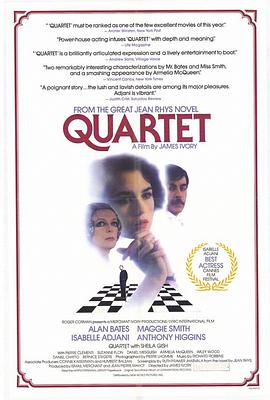
It has been said that most great twentieth century novels include scenes in a hotel, a symptom of the vast uprooting that has occurred in the last century: James Ivory begins Quartet with a montage of the hotels of Montparnasse, a quiet prelude before our introduction to the violently lost souls who inhabit them. Adapted from the 1928 autobiographical novel by Jean Rhys, Quartet is the story of a love quadrangle between a complicated young West Indian woman named Marya (played by Isabelle Adjani), her husband Stefan (Anthony Higgins), a manipulative English art patron named Heidler (Alan Bates), and his painter wife Lois (Maggie Smith). The film is set in the Golden Age of Paris, Hemingway's "moveable feast" of cafe culture and extravagant nightlife, glitter and literati: yet underneath is the outline of something sinister beneath the polished brasses and brasseries. When Marya's husband is put in a Paris prison on charges of selling stolen art works, she is left indigent and is taken in by Heidler and his wife: the predatory Englishman (whose character Rhys bases on the novelist Ford Madox Ford) is quick to take advantage of the new living arrangement, and Marya finds herself in a stranglehold between husband and wife. Lovers alternately gravitate toward and are repelled by each other, now professing their love, now confessing their brutal indifference -- all the while keeping up appearances. The film explores the vast territory between the "nice" and the "good," between outward refinement and inner darkness: after one violent episode, Lois asks Marya not to speak of it to the Paris crowd. "Is that all you're worried about?" demands an outraged Marya. "Yes," Lois replies with icy candor, "as a matter of fact." Adjani won the Best Actress award at Cannes for her performances in Quartet: her Marya is a volatile compound of French schoolgirl and scorned mistress, veering between tremulous joy and hysterical outburst. Smith shines in one of her most memorable roles: she imbues Lois with a Katherine-of-Aragon impotent rage, as humiliated as she is powerless in the face of her husband's choices. Her interactions with Bates are scenes from a marriage that has moved from disillusionment to pale acceptance. Ruth Prawer Jhabvala and James Ivory's screenplay uses Rhys's novel as a foundation from which it constructs a world that is both true to the novel and distinctive in its own right, painting a society that has lost its inhibitions and inadvertently lost its soul. We are taken to mirrored cafes, then move through the looking glass: Marya, in one scene, is offered a job as a model and then finds herself in a sadomasochistic pornographer's studio. The film, as photographed by Pierre Lhomme, creates thoroughly cinematic moments that Rhy's novel could not have attempted: in one of the Ivory's most memorable scenes, a black American chanteuse (extraordinarily played by Armelia McQueen) entertains Parisian patrons with a big and brassy jazz song, neither subtle nor elegant. Ivory keeps the camera on the singer's act: there is something in her unguarded smile that makes the danger beneath Montparnasse manners seem more acute.
马努(阿尤斯曼·库拉纳 Ayushmann Khurrana 饰)经营着一家健身房,他人生最大的梦想就是能够赢得健美比赛的冠军,以此来为自己的健身房增加人气。这一天,马努的健身房迎来了一位名叫马恩亚(瓦妮·卡普尔 Vaani Kapoor 饰)的舞蹈教练,马恩亚拥有健美的身材和俊秀的脸庞,她的到来一下子就吸引了马努的注意,让这个小伙子坠入了情网之中。 随着时间的推移,马努和马恩亚之间渐渐熟悉,并且萌生出了感情的萌芽,直到此时,马恩亚才告诉了马努一个惊人的秘密——她并非生而为女,而是一名变性人。马努出生在一个非常传统和保守的家庭之中,这个秘密让他的三观遭受了剧烈的冲击。
After unhitching her camper at a lakeside in the mountains, Faye finds her rhythm cooking meals, retrieving crawfish from a trap, and scanning her old box radio for a station. She looks expectantly at the approach of a car or the mailman, explaining to neighboring campers that she’s waiting for a childhood sweetheart she hasn’t seen in decades. When he does arrive, Lito and Faye, both widowed, spend an evening reminiscing about their lives, losses, and loneliness. A whimsical romance, Max Walker-Silverman’s captivating debut feature shows an "American West" full of quietude, compassion, and introspection. It’s both naturalistic and vaguely surreal, blurring our sense of time and beauty, loss and vivacity, the grandiose natural world and intimate humanism. Career performances from Dale Dickey and Wes Studi bring an inescapable presence to people we don’t often see portrayed on film. They are gentle outliers possessed of resilience and existential spirit, seeking to process something elusive: a feeling of love for what’s no longer there. Like Faye turning her radio dial, they listen hopefully for the faint trace of a song.
故事發生在20世紀夏威夷咖啡田的背景下,關於一個超越種族和階級界限追求禁忌之愛的年輕人的成年旅程
HBO在刚播完第二季后,取消了本季收视下滑的《寻》。不过HBO表示将以一个电视电影特别篇的方式讲清楚所有的故事。这也是之前HBO对之前有几部喜剧被取消采取的作法。 帕特里克(乔纳森·格罗夫 Jonathan Groff 饰)重新回到旧金山,他该如何面对昔日的朋友和前男友们,需要面对怎样的选择和决定......
抗日战争爆发,徐坚白 (张扬) 仍沉醉儿女私情, 史亚南 (叶枫) 下嫁给他, 南离开坚白前往投军。 那边厢, 兰 (尢敏) 加入战地救护队, 秋明则加入劳军歌舞团。 兰在战地上救回差点被当成阵亡士兵的坚白。 兰知道坚白心系于亚南, 竟往访后者, 要求她探望坚白, 与此同时, 她自己的病情也急转直下…… 本集故事极尽曲折浪漫之能事, 最后结局打破一般言情剧的大团圆处理, 三名女角各有不同下场, 教人唏嘘不已。三人的形象和演技在本集中都有颇大变化, 但演来均层次分明, 各有千秋。
蓓蓓(项瑾 饰)、许乐(张怀秋 饰)和许治(梁正群 饰)是感情十分要好的朋友,与此同时,蓓蓓和许治还是一对恩爱的情侣,两人都认定了对方就是自己要携手步入婚礼殿堂的那一个人。大学毕业之后,三人决定合伙开一间婚礼顾问公司,哪知道公司尚未建立,许治就被查出患上了不治之症,很快便撒手人寰。 许治的死让蓓蓓陷入了悲伤和绝望之中,同样的,许乐也有着他难以说出口的秘密,那就是一直以来,他都在内心里默默的爱慕着蓓蓓,许治的死让这份真挚而又火热的感情更加难以说出口。为了大臣许治的遗愿,蓓蓓和许乐两人创立了幸福种子工作室。