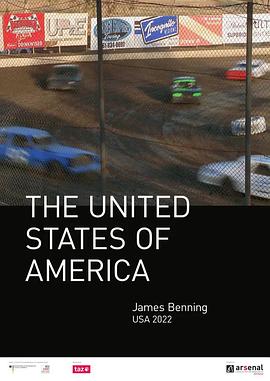
James Benning’s first film called The United States of America was a 1975 trip across the country, capturing its scenery through a car windshield. This second one also crisscrosses the nation, but without a car, carving it up instead into a series of static shots of just under two minutes, one for each state, presented alphabetically, from Heron Bay, Alabama to Kelly, Wyoming. The names of the places are nondescript, but the images attached to them are anything but, immaculately composed shots of landscape, cityscape and the spaces in between. As we move from A to Z, the images coalesce into a portrait of today’s USA, tracing out its fault lines almost in passing: fenced-off facilities, a river bed running dry, factories and refineries, run-down streets and gas stations, a camp under a bridge. The past is there too, seeping up through the songs and speeches that sporadically pierce the background noise or the motifs that evoke a whole career the clouds, trains and cabins are stand-ins for films, not just states. As always, there’s time for more abstract thoughts too: each image may stand for a state, but representativity is slippery. Which state is more cinematic than the rest?
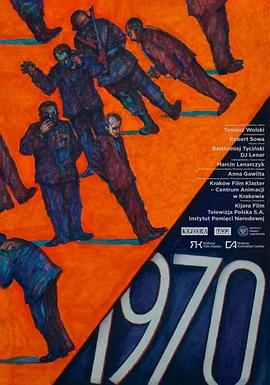
1970年末,当波兰爆发抗议时,一个危机处理小组在华沙成立。不久之后,民兵开始使用警棍。枪支开火。通过录音档案和动画,观众可以观察到各个权力机制。本片从压迫者的角度,讲述了一个关于反抗的故事。
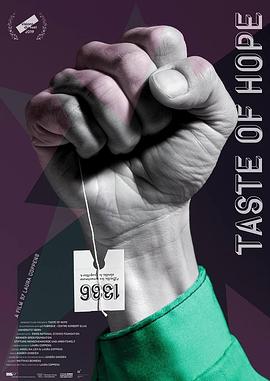
The workers of a self-managed tea factory decide to go against the grain and play by their own rules. The problem is, how can you plan, work and survive in a world driven by ruthless competition? One day at a time, for instance. In a world ruled by profit and dominated by the exploitation of the weaker ones, the film literally offers an alternative set of ways about how to think our future and the means and tools to work for it. It is not an easy job but, as Taste of Hope carefully and precisely shows, there is still a lot that can be done if we change our relationship to production and labor. Instead of making grand gestures or political statements, the filmmaker works with the camera and with a thoughtful editing in order to understand how to weave together new possibilities of communal existence. The result is a superbly crafted observational exercise. A little manual of self-defense and resistance in the face of a neoliberalism that wishes for workers to keep their heads down. A taste of hope indeed.
Using a series of experiments, illusions and man-on-the-street demonstrations, host Jason Silva and guest experts unlock the science behind the mysteries of why we say, eat, feel and act as we do with episodes on topics ranging from memory and common sense, to morality and the paranormal. Through an intricate series of interactive experiments designed to mess with your mind, we reveal the inner-workings of your brain. Hailed by critics as "tremendous fun" that "makes science entertaining," Brain Games turns your mind's eye inwards for a fascinating journey into the three and a half pounds of tissue that makes you... you. S6 E1 - Positive Thinking S6 E2 - Scams S6 E3 - Sleep S6 E4 - Perspective S6 E5 - Animals vs. Human S6 E6 - Imagination
塞琳娜·昆塔尼利亚——被誉为“德克萨斯音乐女王”——以及她的家庭乐队“塞琳娜与洛斯·迪诺斯”,从在十五岁成人礼上表演起步,最终发展到举办座无虚席的体育馆巡回演唱会。通过家庭私人档案中从未曝光的画面,记录了她一生的传奇和留下的遗产。伊莎贝尔·卡斯特罗带着对塞琳娜·昆塔尼利亚的深情致敬重返圣丹斯电影节(继2022年的《米哈》之后)。她巧妙地捕捉到了这位歌手的热情、谦逊以及她与家人之间深厚的情感纽带。与她亲近之人的访谈揭示了她成名背后的付出与牺牲,而怀旧的家庭录像则将我们带回20世纪90年代,提供了前所未见的巡演生活片段。这些家庭录像的温暖仿佛让我们与昆塔尼利亚一家坐在一起,亲身重温他们的旅程。卡斯特罗展示了塞琳娜的个人魅力和对表演的热爱,同时也为她的家人提供了空间,让他们能够庆祝自己的女儿、姐妹和妻子。无论是塞琳娜的忠实粉丝,还是刚刚开始了解她的人,卡斯特罗都提供了一个全新的视角来体验塞琳娜的遗产,并让人们忍不住想要高唱《像朵花》。
天工开画卷,苏作耀匠心。 苏州,一座古老与现代并存的城市。两千五百多年来,铅华洗尽,流传下了灯彩、核雕、宋锦、明式家具、船点、苏绣、香山帮营造、缂丝、玉雕等一大批巧夺天工的非物质文化遗产。 影片以12位代表性传承人的视角,讲述了这9项手艺的前世今生,以及传承人与手艺之间发生的温情故事。沉睡的手艺被亲情唤醒,年轻绣娘拜师“择一事终一生”,古老“香山帮”的传承人的代际碰撞。
本纪录片聚焦蕾尤娜,回忆了她 以塔玛拉的艺名声名鹊起的经历,探讨了她在千禧时代如何应对狂热的媒体以及与之竞争的电视明星如今的生活。