纵横四海粤语版
3.0 |04月08日 |HD
简介:

砵仔糕(周润发饰)、阿占(张国荣饰)和红豆(锺楚红饰)均是孤儿,在养父(曾江饰)栽培下成为国际大盗。长大后成了帮他赚钱的艺术品大盗,而三人同时又认了警察(朱江饰)为干爹。 法国巴黎博物馆内,名画《赫林之女仆》被人盗走。与此同时,阿海、阿占和红豆三人以敏捷身手盗得另一幅名画,在与法国大哥交易时得知名画《赫林之女仆》在妖气重重的古堡内,他们在曾江安排下成功地盗取此画之后,反被集团原凶曾江与法国大哥合谋设下陷阱,派人追杀灭口。阿海驾车与杀手快艇相撞…… 三人失散,数年后,他们在香港重聚,阿海“瘫痪”住在朱江家里,阿占和红豆已经结婚了。曾江又逼他们去偷画……©豆瓣

猜你喜欢
换一换
欧洲的某个地方
72
9.0
HD中字
欧洲的某个地方
9.0
更新时间:04月09日
主演:Artúr,Somlay,Miklós,Gábor,Zsuzsa,Bánki
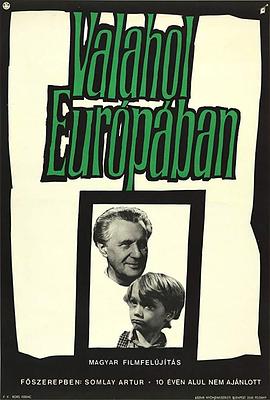
简介:Somewhere in the remote region, the war ends. In the midst of ruined cities and houses in the streets, in rural hamlets, everywhere where people still live, are children who have lost their homes and parents. Abandoned, hungry, and in rags, defenseless and humiliated, they wander through the world. Hunger drives them. Little streams of orphans merge into a river which rushes forward and submerges everything in its path. The children do not know any feeling; they know only the world of their enemies. They fight, steal, struggle for a mouthful of food, and violence is merely a means to get it. A gang led by Cahoun finds a refuge in an abandoned castle and encounters an old composer who has voluntarily retired into solitude from a world of hatred, treason, and crime. How can they find a common ground, how can they become mutual friends The castle becomes their hiding place but possibly it will also be their first home which they may organize and must defend. But even for this, the price will be very high.  To this simple story, the journalist, writer, poet, scriptwriter, movie director, and film theoretician Béla Balázs applied many years of experience. He and the director Géza Radványi created a work which opened a new postwar chapter in Hungarian film. Surprisingly, this film has not lost any of its impact over the years, especially on a profound philosophical level. That is to say, it is not merely a movie about war; it is not important in what location and in what period of time it takes place. It is a story outside of time about the joyless fate of children who pay dearly for the cruel war games of adults.  At the time it was premiered, the movie was enthusiastically received by the critics. The main roles were taken by streetwise boys of a children's group who created their roles improvisationally in close contact with a few professional actors, and in the children's acting their own fresh experience of war's turmoil appears to be reflected. At the same time, their performance fits admirably into the mosaic of a very complex movie language. Balázs's influence revealed itself, above all, in the introductory sequences an air raid on an amusement park, seen in a montage of dramatic situations evoking the last spasms of war, where, undoubtedly, we discern the influence of classical Soviet cinematography. Shooting, the boy's escape, the locomotive's wheels, the shadows of soldiers with submachine guns, the sound of a whistle—the images are linked together in abrupt sequences in which varying shots and expressive sharp sounds are emphasized. A perfectly planned screenplay avoided all elements of sentimentality, time-worn stereotypes of wronged children, romanticism and cheap simplification. The authors succeeded in bridging the perilous dramatic abyss of the metamorphosis of a children's community. Their telling of the story (the scene of pillaging, the assault on the castle, etc) independently introduced some neorealist elements which, at that time, were being propagated in Italy by De Sica, Rossellini, and other film artists. The rebukes of contemporary critics, who called attention to formalism for its own sake have been forgotten. The masterly art of cameraman Barnabás Hegyi gives vitality to the poetic images. His angle shots of the children, his composition of scenes in the castle interior, are a living document of the times, and underline the atmosphere and the characters of the protagonists. The success of the picture was also enhanced by the musical art of composer Dénes Buday who, in tense situations, inserted the theme of the Marseilaise into the movie's structure, as a motive of community unification, as an expression of friendship and the possibility of understanding.  Valahol Europaban is the first significant postwar Hungarian film. It originated in a relaxed atmosphere, replete with joy and euphoria, and it includes these elements in order to demonstrate the strength of humanism, tolerance, and friendship. It represents a general condemnation of war anywhere in the world, in any form.

6363
1948
欧洲的某个地方
主演:Artúr,Somlay,Miklós,Gábor,Zsuzsa,Bánki
尚未到头
635
10.0
HD中字
尚未到头
10.0
更新时间:04月13日
主演:弗洛里安·大卫·菲茨,亨利·许布兴,Marius,V.,Haas,莱斯利·马尔顿,斯科拉·鲁特,Jamie,Bick,Felix,von,Manteuffel,Eva-Maria,Kromer,Florian,Brückner,Mahendra,Munisamy,Sherard,Parker,Ulla,Geiger,Sarah,Mathilda,Libbertz,Nadine,Wrietz,约翰内斯·齐尔纳
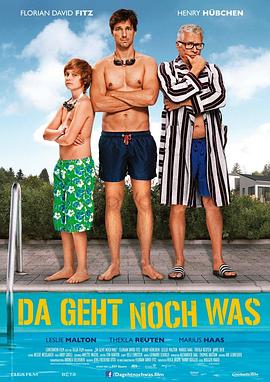
简介:人不能选择自己的家庭——苦于对父亲的不满,康拉德(Florian David Fit饰)把每年拜访父母的时间压缩到最少。他的父亲卡尔(Henry Hübchen饰)是个乖戾的老顽固,从来都不给儿子或者儿媳塔玛拉(Thekla Reuten饰)一点儿好脸色。而康拉德的儿子约纳斯(Marius Haas饰)则把去爷爷奶奶家这件事看得很实际——他有多乖巧全部取决于老爸付了多少钱。今年,康拉德的母亲海伦娜(Leslie Malton饰)在生日茶会上宣布的新消息却让人大吃一惊:她离开了相处40年的老伴儿。她还请康拉德帮一个忙:回到从前的家送点儿东西。然而,一切却出乎意料:卡尔不仅成天以大罐大罐的啤酒度日,还在无尽的自我怜悯中不可自拔。当卡尔不慎掉进空泳池受伤之后,康拉德不得不带着约纳斯一起暂住进了自己当年的房间。三代人同住一个屋檐下:这会是噩梦还是全新的开始?(豆瓣字幕翻译2.0小组)
6950
2013
尚未到头
主演:弗洛里安·大卫·菲茨,亨利·许布兴,Marius,V.,Haas,莱斯利·马尔顿,斯科拉·鲁特,Jamie,Bick,Felix,von,Manteuffel,Eva-Maria,Kromer,Florian,Brückner,Mahendra,Munisamy,Sherard,Parker,Ulla,Geiger,Sarah,Mathilda,Libbertz,Nadine,Wrietz,约翰内斯·齐尔纳
被炉蜜桔和小猫
629
1.0
HD中字
被炉蜜桔和小猫
1.0
更新时间:04月13日
主演:木岛法子,福见真纪,镰田纮子
简介:同性が好きな百合系女子たちを主人公にした、ガールズラブストーリーの第2弾。温泉旅行に出た女性3人の交錯する思惑を、甘く、切なく、シュールに映し出す。前作に引き続いてヒロインのニャーを演じる『ユリ子のアロマ』などの木嶋のりこ、『猫ラーメン大将』などの南結衣、日テレジェニック2011製作委員会特別賞の酒井蘭とグラビアアイドルが共演。監督は、前作に引き続き梶野竜太郎。大胆なラブシーンにも挑むキャストの熱演に加え、彼女たちの魅力を存分に引き出す梶野監督の手腕にも注目。  あらすじ  男性を恋愛の対象として見ることができない百合系女性が集うSNSで、こたつ、みかんのハンドルネームを名乗る女性たちと懇意になったニャー(木嶋のりこ)。3人で温泉旅行へと出掛けるが、こたつ、みかんがこつぜんと姿を消してしまう。失意に沈んでいた彼女だったが、こたつ、みかんのハンドルネームを受け継いでSNSに現われた、ひばり(南結衣)、いづみ(酒井蘭)と触れ合うように。そして、新たに3人で温泉旅行へと向かうニャーだったが……。
957
2013
被炉蜜桔和小猫
主演:木岛法子,福见真纪,镰田纮子
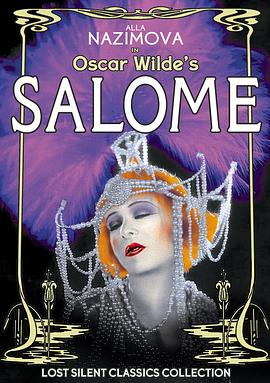
萨乐美
31
9.0
HD中字
萨乐美
9.0
更新时间:04月13日
主演:艾拉·娜兹莫娃
简介:Salomé (1923), a silent film directed by Charles Bryant and starring Alla Nazimova, is a film adaptation of the Oscar Wilde play of the same name. The play itself is a loose retelling of the biblical story of King Herod and his execution of John the Baptist (here, as in Wilde's play, called Jokaanan) at the request of his stepdaughter, Salomé, whom he lusts after.  Salomé is often called one of the first art films to be made in the U.S.[citation needed] The highly stylized costumes, exaggerated acting (even for the period), minimal sets, and absence of all but the most necessary props make for a screen image much more focused on atmosphere and on conveying a sense of the characters' individual heightened desires than on conventional plot development.  Despite the film being only a little over an hour in length and having no real action to speak of, it cost over $350,000 to make. All the sets were constructed indoors to be able to have complete control over the lighting. The film was shot completely in black and white, matching the illustrations done by Aubrey Beardsley in the printed edition of Wilde's play. The costumes, designed by Natacha Rambova, used material only from Maison Lewis of Paris, such as the real silver lamé loincloths worn by the guards.  No major studio would be associated with the film, and it was years after its completion before it was released, by a minor independent distributor. It was a complete failure at the time and marked the end of Nazimova's producing career.  A longstanding rumor, which seems to have started while the film was still in production, suggests that its cast is comprised entirely of gay and bisexual actors in an homage to Oscar Wilde, as per star and producer Nazimova's demand. It is, of course, impossible to say, but one of the extras in Salomé reported that a number of the cast members—both featured and extras—were indeed gay, but not an unusual percentage of them, and certainly not all of them. What can be said is that Nazimova herself was a lesbian, the two guard characters (who, next to Salomé, have the most screen time) are at least played very stereotypically gay, and several of the female courtiers are men in drag.  Salomé was screened in 1989 at the New York International Festival of Lesbian and Gay films and in 1990 at the New York Gay Experimental Film Festival.  In 2000, the United States Library of Congress deemed the film culturally significant and selected it for preservation in the National Film Registry.
6111
1923
萨乐美
主演:艾拉·娜兹莫娃
评论区